

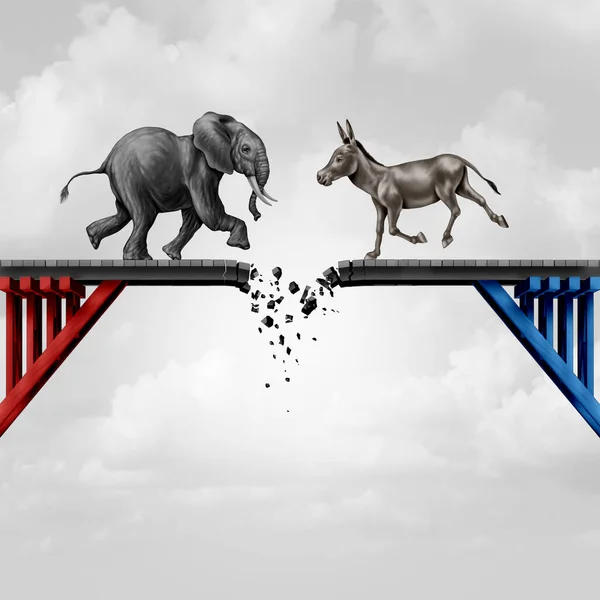
Independents are the largest voting bloc in the United States, often making up around 40 percent or more of voters. Given their size, it raises an obvious question: why have Independent candidates historically failed to seriously challenge the two party system?
Only one Independent has ever been elected president, George Washington, who famously warned against political parties in 1796. Since then, even the most successful non major party candidates have fallen far short. Figures like Theodore Roosevelt, Ross Perot, George Wallace, and others managed notable vote shares, but none came close to winning. Most of these candidates were not truly independent anyway, instead running under new parties built around their own ideologies.
So if so many Americans identify as Independent, why have they not united behind an Independent alternative focused on policies rather than party labels? The answer lies in how deeply entrenched Democrats and Republicans are. Over more than a century, the two parties have divided the electorate, monopolized national media, and established themselves as the only viable choices. Many Americans are raised knowing no other system.
Both parties profit from division. While political leaders may view politics as strategy, many voters see their party as a reflection of their core values, personal identity, and beliefs. This encourages hostility toward the other side and turns elections into cultural battles. Campaigns become about party loyalty rather than candidate quality, generating money through donations, merchandise, and rallies.
Independents often become targets rather than a unified force. To major party candidates, they are persuadable voters to be marketed to. In the end, many Independents feel forced to choose the lesser of two evils. This is not entirely their fault, as they are rarely offered a viable alternative. In recent elections, even Independent candidates have reinforced the two party system, such as when Robert F. Kennedy Jr. dropped out in 2024 and endorsed a major party candidate, funneling his supporters back into the system he claimed to oppose.
For a true third party to succeed, it would need two things that have been missing for decades. First, a clear and credible leader who can present a balanced alternative without the extremism associated with either party. Second, a strong grassroots network. Independent candidates cannot rely on mainstream media, which is overwhelmingly aligned with the two major parties. Many major news outlets serve audiences that are almost entirely partisan, leaving little space for alternative voices.
Independent voters often value the ability to think freely and draw ideas from both sides without being labeled disloyal. They ask why those same qualities cannot exist in elected officials, where candidates are judged on their platforms rather than the letter next to their name. Until there is a strong candidate and a coordinated national effort, Independents will continue to be pulled back into a system that does not fully represent them.
Empire Posts leaves the question (as we often do) to the reader, is it time to rethink how elections are run, which candidates are elevated, and whether the two party system should continue to dominate American politics.