

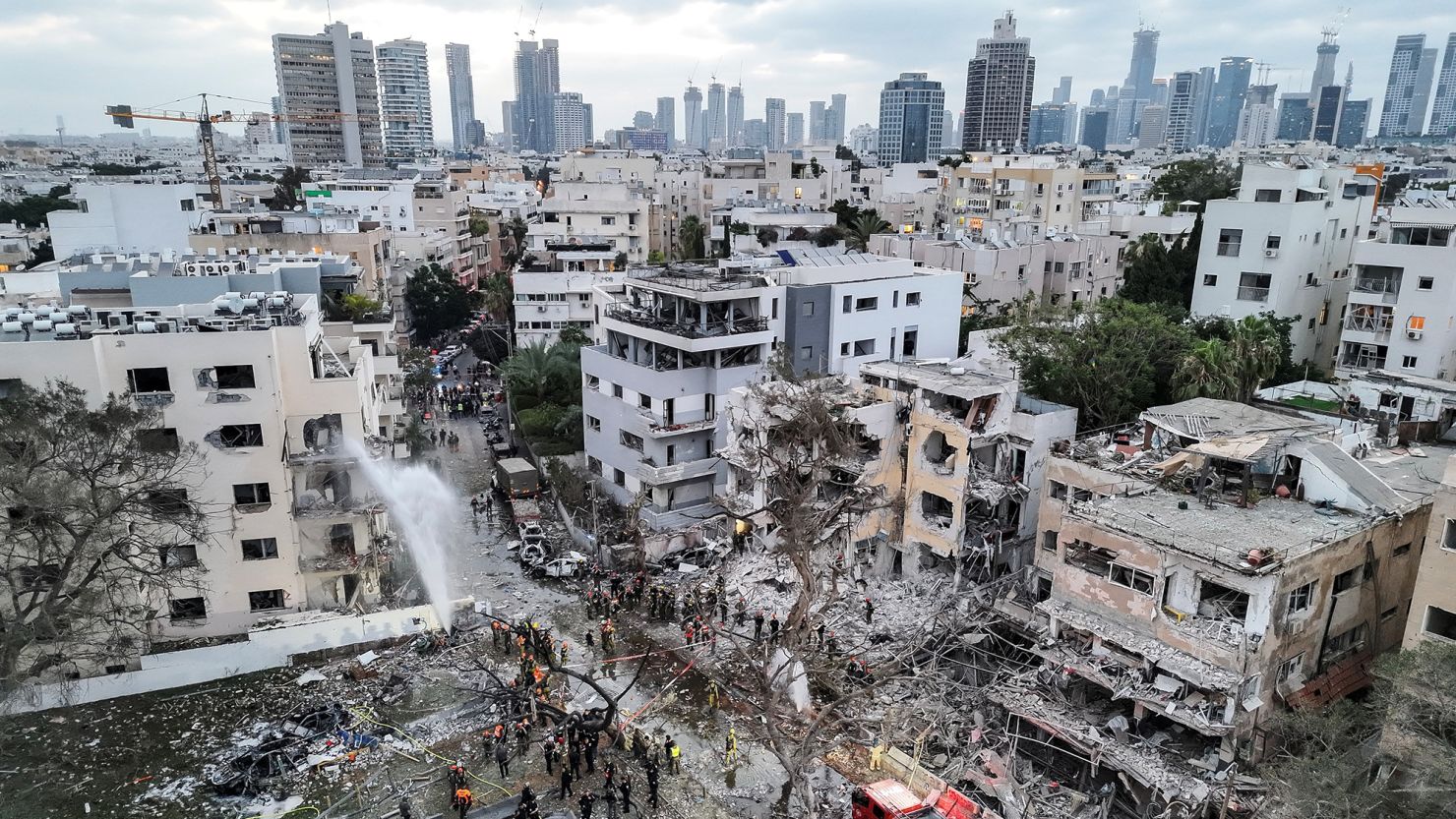
The world’s temperature has once again been cranked up. Like many conflicts today, decades of rising tension have given way to full-fledged war, and the Israel–Iran conflict is one example that Empire Posts will be diving into today.
Like most things in life, war has a backstory, an antecedent, and in the case of the Israeli–Iranian conflict, it has been long in the making.
To begin our timeline, we go back to 1947 and 1949, when Iran joined 12 other countries in voting against the United Nations Partition Plan for Palestine and Israel’s admission to the United Nations, respectively.
The year 1979 proved to be highly consequential in this conflict. Following the Iranian Revolution, Ayatollah Khomeini severed all ties with Israel, transforming what had once been a relatively cooperative relationship into a hostile one.
Later that same year on November 4, 1979, the Iran hostage crisis began. After the revolution, the United States allowed the terminally ill Shah, Mohammad Reza Pahlavi, to enter the country for medical treatment. Fearing a U.S.-backed effort to restore him to power, Iranian militants stormed the U.S. Embassy in Tehran and seized 66 Americans. The crisis ended on January 20, 1981, with the hostages released, but it left a lasting fracture in U.S.–Iran relations, something that continues to shape the conflict today.
Roughly a year later, Iran began organizing, training, and financing Hezbollah in Lebanon following the 1982 Israeli invasion of the country, establishing a long-term hostile front against Israel.
Events begin to more closely resemble the current conflict in the early 2000s. In 2002, Iran’s covert nuclear program at Natanz was revealed, prompting Israel to vow to prevent Iran from obtaining a nuclear weapon. In 2006, Israel fought a war with Hezbollah that ended in a tense stalemate.
In 2010, a computer virus widely believed to be a joint U.S.–Israeli operation known as Stuxnet, destroyed Iranian centrifuges used to enrich uranium, a key step in developing nuclear weapons.
Tensions escalated further in 2020 with the assassination of Mohsen Fakhrizadeh, a leading figure in Iran’s nuclear program. The killing was widely attributed to Israeli intelligence and marked a significant turning point.
In April 2024, a suspected Israeli strike on Iran’s consulate in Damascus led to Iran’s first direct attack on Israel, involving hundreds of drones and missiles, an unprecedented escalation.
By June 2025, the situation had intensified into what became known as the 12-day war, a major confrontation involving direct Israeli and U.S. airstrikes on Iranian nuclear and military facilities, followed by large-scale Iranian retaliation.
The most significant display of U.S. involvement came on February 28, 2026, when Iran’s Supreme Leader, Ali Khamenei, was killed at age 86 during a large-scale airstrike on a leadership compound in Tehran carried out by the United States and Israel. His death, confirmed by Iranian state media, marked a critical turning point and further deepened U.S. involvement in the conflict, which continues as of April 2026.
U.S. President Donald Trump stated that American forces would withdraw from Iran within four to six weeks. However, officials have also hinted at a longer-term presence to achieve strategic objectives. This has sparked protests across the United States, as many Americans oppose deeper involvement in the conflict.
Every deep dive eventually reaches the present, a moment that is constantly changing. Empire Posts, as always, leaves the final question to the reader: What role should the United States play in this conflict? Should it intervene? And in the end, how does this involvement serve American interests?